
Keep critical APIs reliable
and responsive
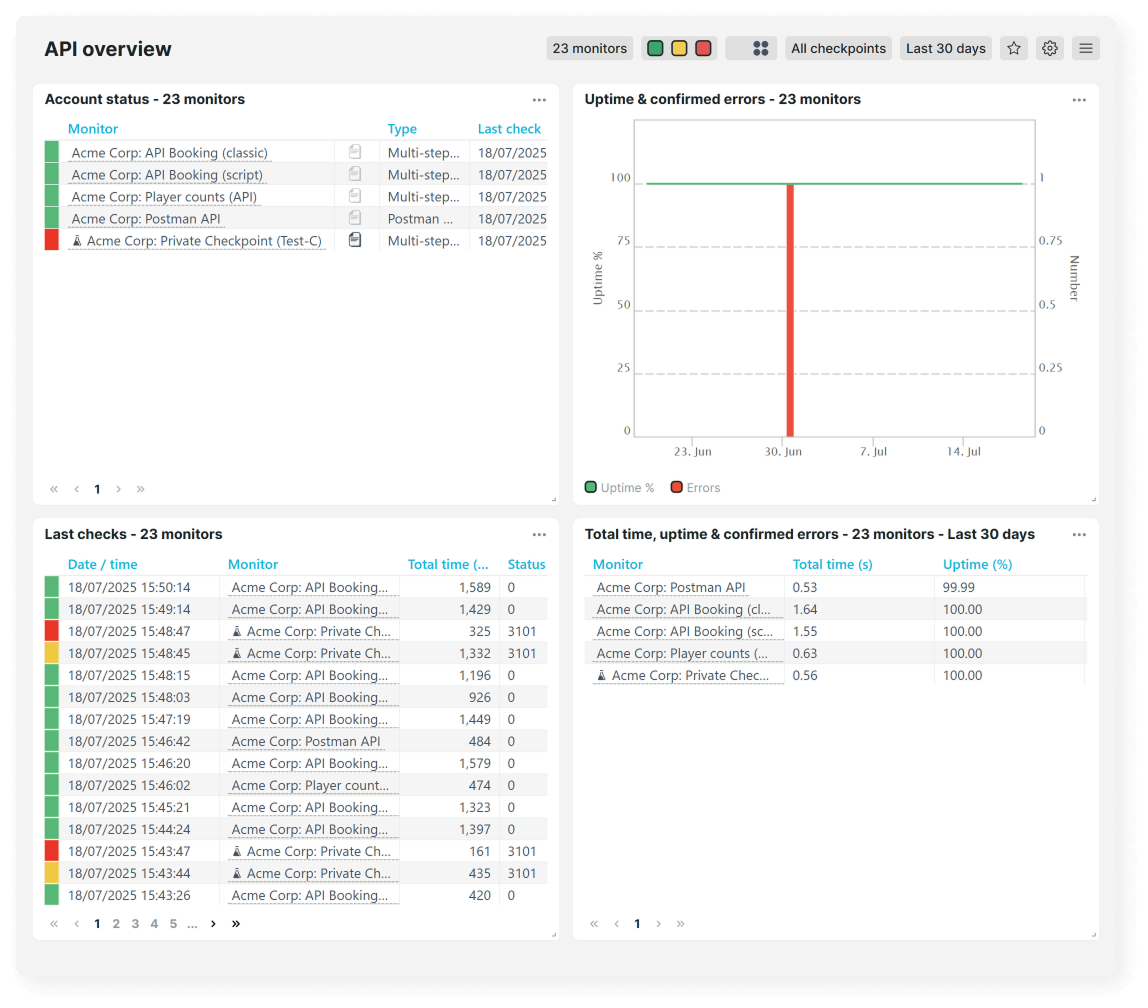
APIs are the backbone of your digital experience. When they fail, your services follow. Uptrends lets you test single and chained API requests, validate responses, and track performance over time. Detect disruptions and third-party issues before end users ever feel them.
Expose front-end errors fast
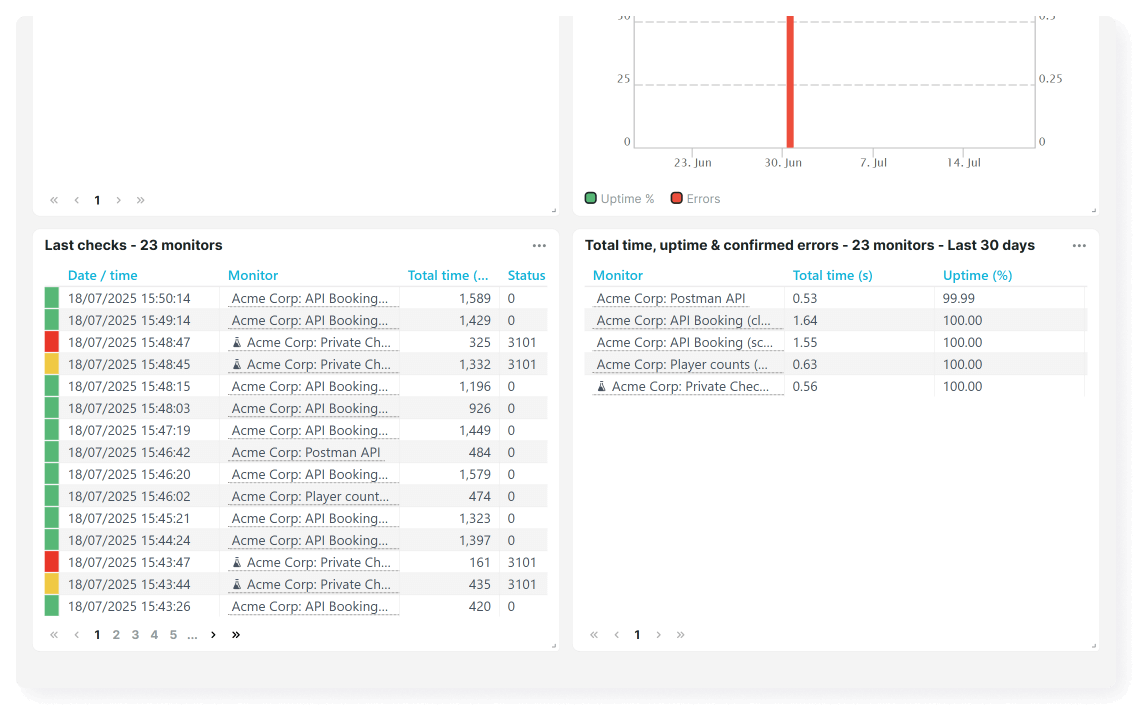
Client-side code can fail silently. And then users notice. Detect JavaScript, rendering, and asset-loading errors, so you can fix problems long before they affect experience.
Free 30-day trial
Try Uptrends for free
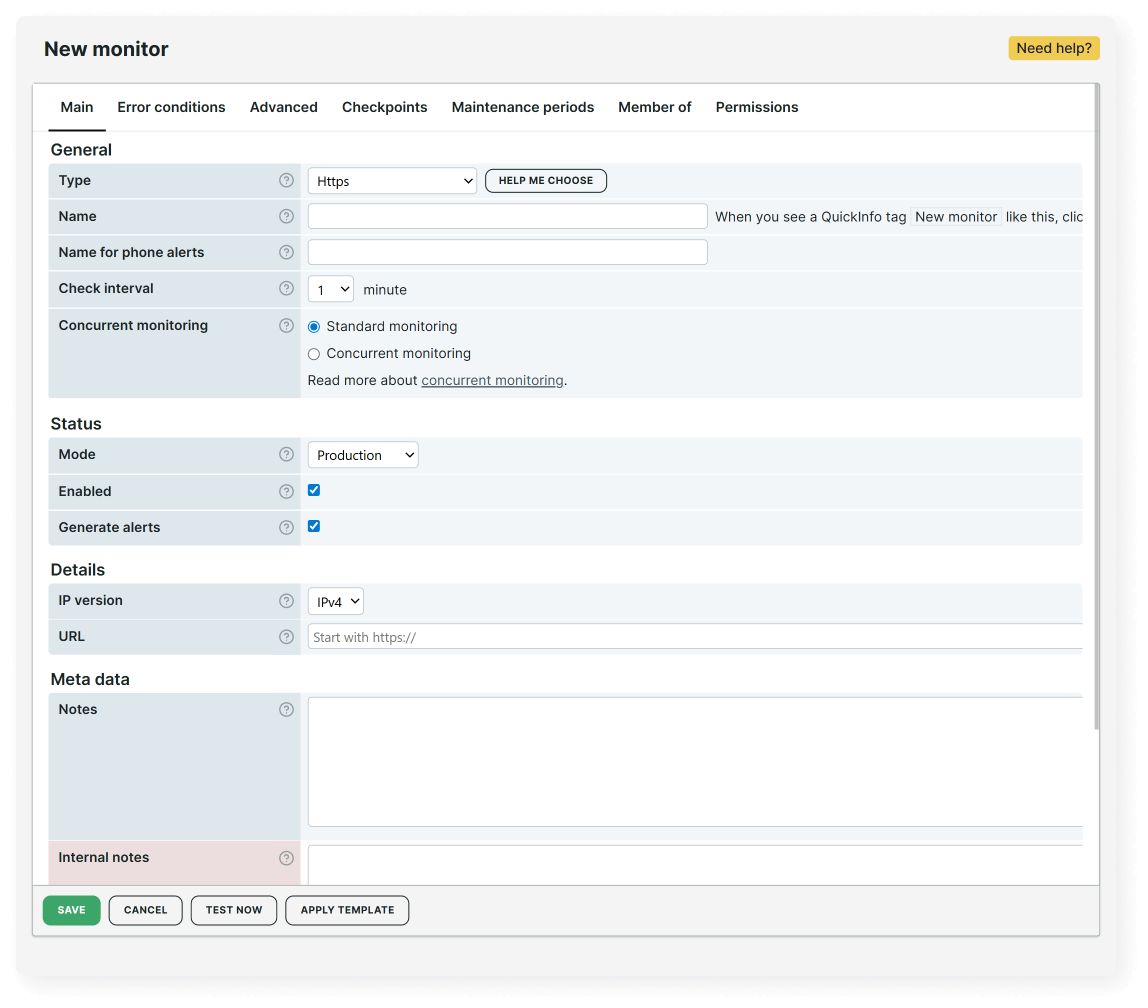
Set up your first monitor today and get 30 days of full access to Uptrends. No credit card required.

Frequently Asked Questions
If you'd like a closer look or personalized guidance, we'll be happy to show you how Uptrends can be customized for your specific needs.
Book my 1-on-1 demoAPI monitoring continually tests endpoints to verify uptime, performance, and correctness of responses. It helps detect slow or failing APIs before they impact connected applications or users.
Uptrends monitors API requests, responses, and dependencies, giving you detailed insight into which step or service failed. You can view response codes, payloads, and timing per request to pinpoint where errors start, including with third-party APIs.
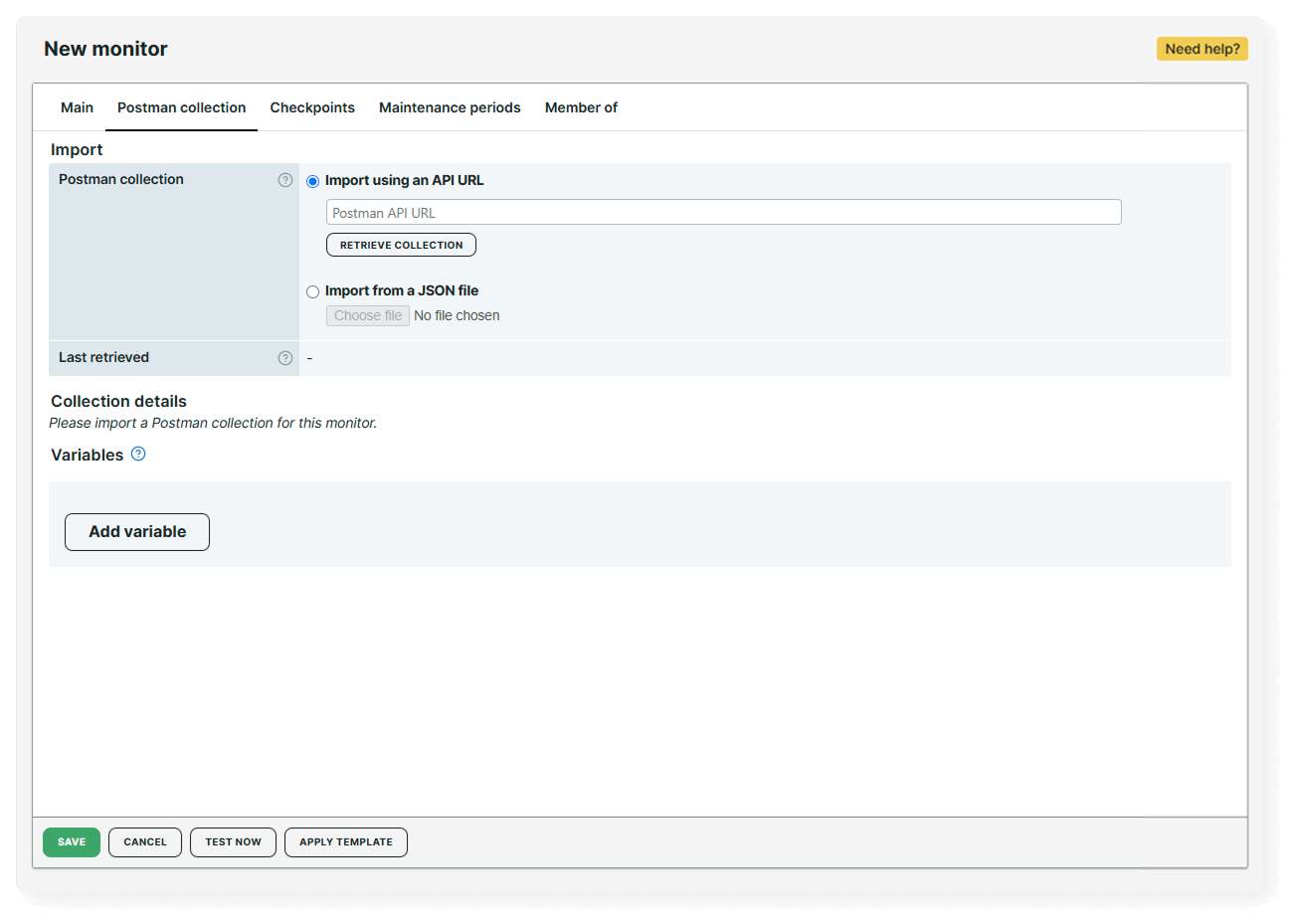
Yes! There’s no need to duplicate your work. You can import Postman collections directly into Uptrends and turn them into active API monitors. That means you can reuse your existing test logic, validate results continuously, and manage everything from one place.
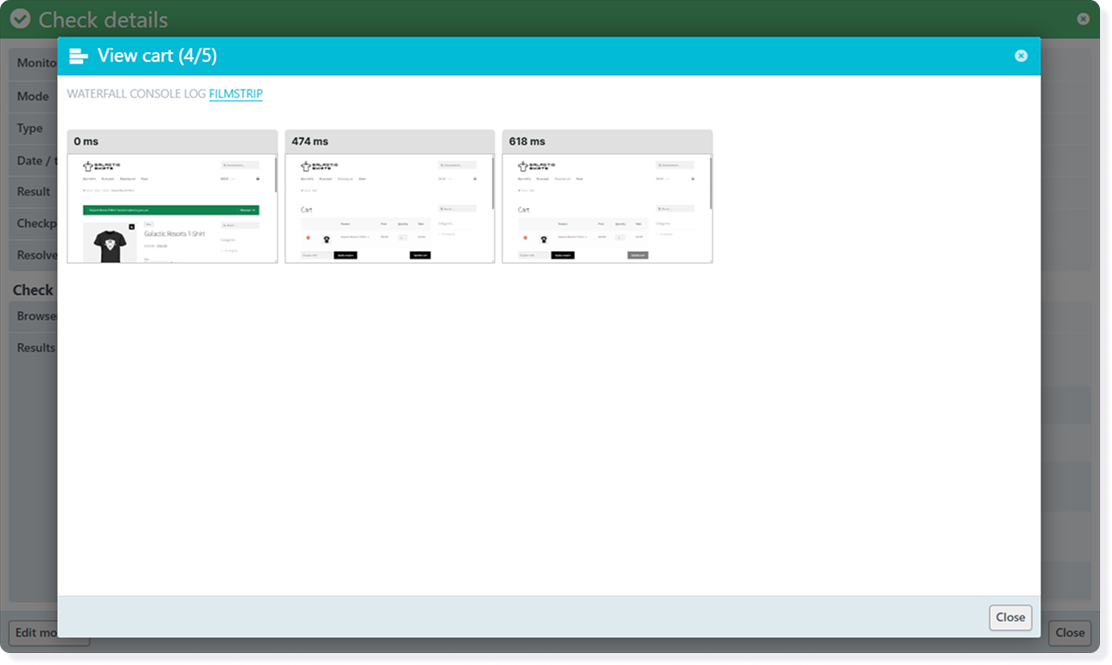
Uptrends uses real browsers to run page tests, recording JavaScript exceptions and console logs, and flagging rendering issues that can break user interactions. You’ll see visual proof (including screenshots and waterfall data) for faster troubleshooting.
Uptrends supports API authentication methods such as OAuth. You can securely store credentials in encrypted vaults and validate both public and protected endpoints automatically.
When a check fails, Uptrends shows complete request-response details. That includes headers, payloads, timing, and status codes. You can quickly verify if the issue came from a bad redirect, CORS configuration, or external service dependency.